Westbury Locksmiths Service Team
Local locksmith team
Apr 1, 2026 14 min read
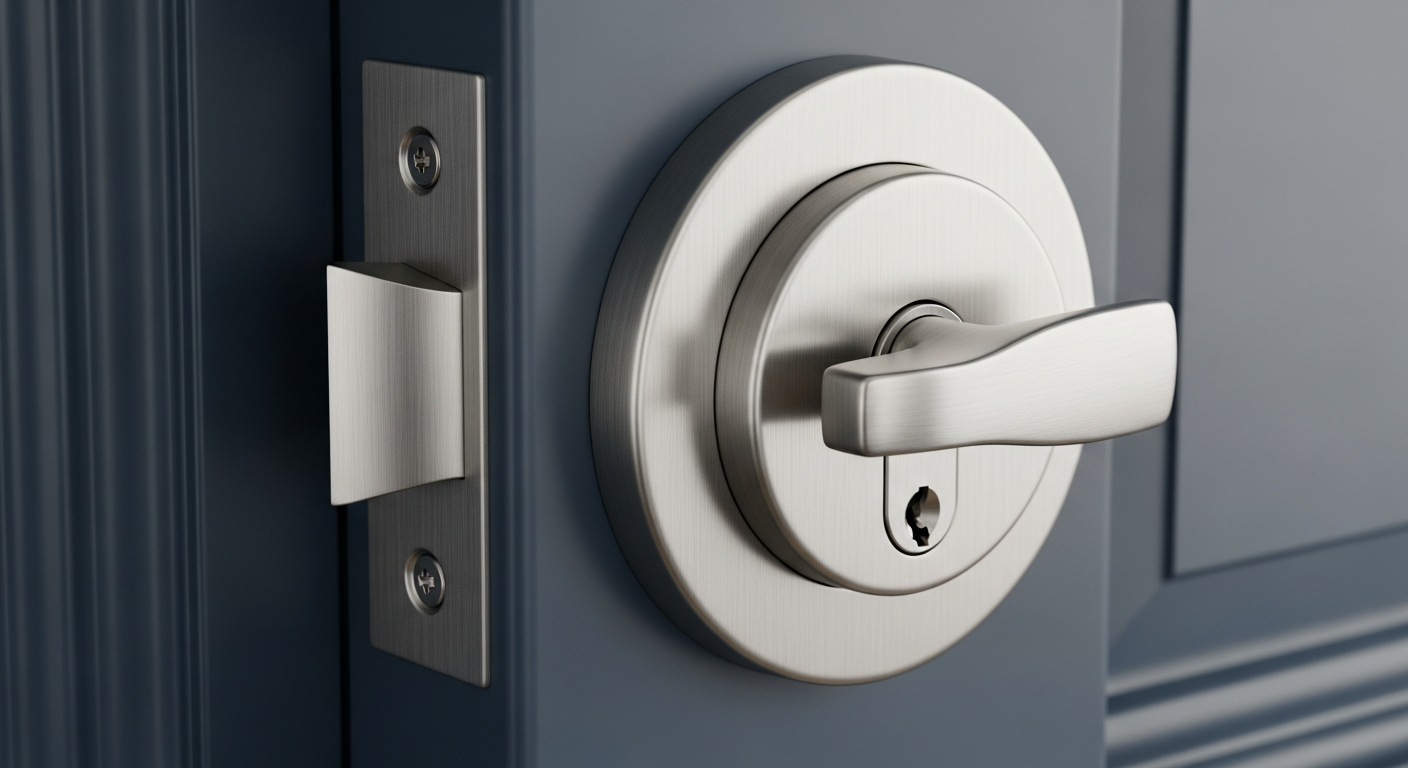
If your front door has been giving you trouble lately — a key that drags, a handle that wobbles, or a latch that doesn't quite catch — your mortise lock may be sending you a warning you can't afford to ignore. Mortise locks are among the most robust locking mechanisms available for exterior doors, commonly found on older homes, brownstones, and commercial properties across Long Island. But even the toughest hardware wears down over time, and a lock that fails at the wrong moment can leave you locked out on Post Avenue at midnight or, worse, leave your home vulnerable to an easy push-in.
This guide walks you through five concrete warning signs that your mortise lock set is heading toward failure — and what to do about each one before you're dealing with a full lockout or a compromised door. Whether you have a classic Baldwin mortise lock on a historic home or a heavy-duty Corbin Russwin mortise lock on a commercial entry door, the warning signs are remarkably similar, and catching them early makes all the difference.
## What Is a Mortise Lock — and Why Failure Is a Bigger Deal Than You Think
A mortise lock is a lock mechanism that fits inside a pocket (the 'mortise') cut into the edge of a door, rather than sitting on the surface like a standard knob or deadbolt. The mortise lock set typically includes a lock body, a mortise lock cylinder, a latch bolt, a deadbolt, and a set of handles or knobs — all working together as a single integrated unit. Because so many components are interconnected, a problem in one area tends to cascade quickly into the others. That's what makes early detection so important.
You'll find mortise lock sets on exterior doors of older Long Island homes, multi-family buildings, and commercial storefronts throughout Westbury and the surrounding Nassau County area. High-end brands like Baldwin mortise lock hardware are popular on residential properties for their durability, while institutional-grade options like the Corbin Russwin mortise lock are standard on school and office buildings. Newer smart mortise lock systems add electronic access control to the same robust mechanical housing. Regardless of brand or age, all of these locks share the same failure points — and the same early warning signs.
## Sign #1: Your Key Sticks, Drags, or Requires Extra Force to Turn
A key that no longer glides smoothly is the single most common early warning sign of a deteriorating mortise lock cylinder. Inside the cylinder, a series of spring-loaded pins align with the cuts on your key to allow rotation. When those springs weaken, when the cylinder housing develops internal corrosion, or when years of dust and dried lubricant create resistance, you'll feel it immediately as a sticking or grinding sensation. At first it may be a minor annoyance you adapt to — lifting the handle slightly, jiggling the key, or leaning into the door. Don't normalize this.
Left unaddressed, a sticking cylinder leads to broken keys inside the lock (a surprisingly common service call we handle throughout Westbury), a seized mechanism that won't turn at all, or a situation where the door operates from one side but not the other. The fix at the early stage is often as simple as a professional cleaning, re-pinning, or cylinder replacement — far less disruptive than an emergency locksmith call at 2 a.m. when the lock gives out entirely. If you're on Old Country Road or anywhere in the Westbury area and you're fighting your own front door every evening, that's your cue to call us before it becomes a crisis.
## Sign #2: The Handle or Lever Feels Loose, Wobbly, or Drops Under Your Hand
Unlike a standard door knob lock or cylindrical deadbolt, the handle on a mortise lock set is directly connected to a spindle that runs through the lock body and operates the latch. When the set screw that secures the handle loosens — or when the spindle itself wears down from thousands of cycles of use — you'll notice the handle has vertical play, rotates past its normal stop point, or drops under your hand without engaging the latch. This is more than a cosmetic issue. A handle that isn't properly engaging the internal cam mechanism means your latch bolt isn't reliably retracting or extending, and you may find yourself in a situation where the door appears locked but can be pushed open, or where the latch won't retract at all and traps you inside.
The spindle and internal cam components of a mortise lock are precision parts, and they're not something to address with a wrench and a YouTube tutorial. A trained locksmith can disassemble the lock body, assess the internal wear, replace specific components, and reassemble the lock to factory specification — often without replacing the entire mortise lock set. If your handle has started that tell-tale wobble, don't wait. Call (516) 400-4528 and one of our mobile locksmiths can be at your door typically within 20 minutes anywhere in the Westbury area.
## Sign #3: The Latch or Deadbolt Doesn't Seat Fully in the Strike Plate
Stand at your door and watch the latch bolt as you close it. It should spring cleanly into the strike plate recess without scraping, hanging up, or requiring you to lift or push the door to get it to catch. If the latch drags on the strike plate edge, retracts slowly, or fails to spring back fully after you turn the handle, the internal spring mechanism inside the mortise lock body is likely failing. Similarly, if your deadbolt requires significant force to throw or doesn't extend to its full length, internal components are worn or misaligned.
This symptom is frequently mistaken for a door alignment problem — and sometimes it is both. Seasonal wood expansion in older Long Island homes can cause doors to shift, which in turn accelerates wear on lock components because the bolt is constantly fighting the frame. A qualified locksmith can distinguish between a hardware problem and a door alignment issue and address both. Ignoring a latch that doesn't seat fully is a genuine security risk: a door that appears closed and locked may not be. This applies equally to a mortise lock set exterior door on a home or a commercial entry — if your storefront on Maple Avenue isn't latching reliably, your building is exposed every time someone walks through.
## Sign #4: Visible Corrosion, Discoloration, or a Faceplate That Has Shifted
The faceplate — the narrow metal plate visible on the door edge — should sit flush against the door with no gaps, discoloration, or visible rust bleeding onto the wood. If you see orange streaking around the faceplate, the lock body inside the mortise pocket is corroding. Salt air is a real factor across Nassau County, and it works its way into the door edge over years of exposure. Corrosion inside the mortise housing causes the internal components to bind, the springs to lose tension, and the cylinder to seize.
A faceplate that has shifted or is no longer flush is a sign the door edge has expanded, the mounting screws have stripped, or the lock body itself has moved within the pocket — none of which are self-correcting. Left alone, the faceplate shift puts the latch bolt and strike plate out of alignment, compounding every other symptom described above. The visual check takes about 10 seconds: stand at your door edge, look at that faceplate, and be honest about what you see. If it doesn't look right, it almost certainly isn't. Our experienced locksmiths carry a full range of replacement components for both residential and commercial mortise lock hardware, so a repair visit rarely requires a second trip.
## Sign #5: The Lock Operates Inconsistently — Works Fine Sometimes, Fails at Others
Intermittent failure is arguably the most dangerous warning sign on this list, precisely because it breeds complacency. The lock works when you leave for work, so you assume you imagined the problem the night before. Intermittent behavior in a mortise lock — where the key turns smoothly one day and binds the next, or the latch retracts on some attempts but not others — typically indicates a worn internal cam, a weakening cylinder spring, or a lock body that is slowly seizing due to progressive corrosion or wear. Temperature and humidity changes in Long Island's four-season climate accelerate this pattern: a lock that behaves in August may fail completely in January when metal contracts.
Intermittent failures also create a false sense of security around what do I do if I have locked myself out of my house — the answer when your lock fails unpredictably is that you may not have warning at all. You won't be jiggling the key and sensing trouble; you'll simply be locked out. At that point you're looking at an emergency locksmith call, potential damage if anyone tries to force entry, and possibly a full lock replacement rather than a simpler repair. The smarter move is to call a professional locksmith Westbury team the moment inconsistency starts — get an assessment, understand what's actually happening inside the lock body, and make a proactive decision about repair or replacement.
Whether you need a straightforward cylinder swap, a full mortise lock set replacement on an exterior door, or a smart mortise lock upgrade with keypad access, our Westbury NY locksmith team handles all of it as part of our full residential and commercial locksmith Westbury services. We work on everything from single-family homes near Salisbury Park to multi-unit buildings and retail storefronts throughout Nassau County — 24-hour services, 365 days a year. Call (516) 400-4528 any time — our mobile locksmiths are stationed to reach most Westbury locations within about 20 minutes.
## Our Locksmith Westbury Services: What We Handle for Homes and Businesses
Our mobile locksmith Westbury NY team provides a comprehensive range of residential and commercial locksmith services, including: mortise lock repair and replacement, mortise lock cylinder re-keying and replacement, smart mortise lock installation and programming, door knob lock installation and repair, deadbolt installation and upgrade, high-security lock installation, lock-out response for homes and businesses, broken key extraction, master key system design and installation, access control system installation, panic bar and exit device service, sliding door lock repair, window lock installation, safe opening and combination changes, mailbox lock replacement, garage door lock service, peephole installation, door frame and strike plate reinforcement, commercial door closer adjustment, padlock and hasp installation, key duplication (standard and restricted keyways), key fob programming and replacement, transponder key cutting, car lockout response, and ignition lock cylinder service.
Our locksmith Westbury residential and commercial services are reliable because we treat each job as a site visit, not a phone estimate — we assess the actual hardware in front of us before confirming a final price. Factors that shape your quote include the specific lock model and brand, the scope of repair versus full replacement, any parts that need to be sourced, the time of day, and travel distance. We confirm an exact up-front price before any work begins, so there are no surprises on the invoice. Our team is insured, experienced with both legacy hardware and modern smart lock systems, and carries a comprehensive inventory of parts on every vehicle — because a second trip wastes your time.
## When to Call an Emergency Locksmith vs. Schedule a Repair
If you've recognized one or more of the warning signs above, the honest answer is: call now, even if it's not yet an emergency. Scheduling a non-urgent assessment is always less expensive and less stressful than an after-hours lockout call. That said, some situations genuinely can't wait — a lock that has fully seized, a door that won't close and latch, or a broken key lodged in the cylinder all require same-day attention regardless of the hour.
A question we hear often is, 'What is a locksmith call out fee, and how much should a locksmith cost per hour?' The short answer: pricing for locksmith services varies based on the nature of the job, the hardware involved, the time of day, and whether parts are needed. We don't quote generic hourly rates over the phone for lock repair because the scope of work on a mortise lock is genuinely variable — a cylinder clean and re-pin takes very different time and materials than a full lock body replacement on a heavy-duty Corbin Russwin mortise lock. What we always provide is a firm quote before work begins, so you make an informed decision. As for 'what locks can locksmiths not open?' — a skilled professional can open virtually any mechanical lock through legitimate, non-destructive methods, though some high-security cylinders may require destructive entry as a last resort, which a trained locksmith will always discuss with you before proceeding.
## Can a Locksmith Reprogram My Key Fob or Upgrade to a Smart Mortise Lock?
Yes — and this is a question worth asking if you're already facing a mortise lock repair. If your lock is aging and showing multiple warning signs, a repair may buy you another year or two while a modern smart mortise lock replacement gives you decades of service, plus the ability to manage access without keys entirely. A smart mortise lock fits into the same door pocket as a traditional mortise lock set, so the door modification is minimal on most doors.
On the automotive side, 'can a locksmith reprogram my key fob?' is also a yes — our mobile team handles key fob programming, transponder key cutting, and car lockout response in addition to residential and commercial door hardware. If you're locked out of your house, the answer to 'what do I do if I have locked myself out of my house' is simple: check for a spare key with a trusted neighbor, verify all other entry points are secure, then call a professional locksmith rather than attempting anything that could damage the door or lock. We handle lockouts for homeowners across Westbury, NY every day — and our 24-hour services mean you're never left waiting on a stoop until morning.
Frequently asked questions
What is a mortise lock, and how is it different from a regular deadbolt?+
A mortise lock is a lock mechanism installed inside a pocket cut into the door's edge, housing the latch bolt, deadbolt, and internal cam all in one integrated body. A standard deadbolt or cylindrical lock mounts through a bored hole and sits largely on the door's surface. Mortise locks are generally more robust and secure because the lock body is fully recessed and anchored within the door's structure, but they are also more complex — which means more components that can eventually wear.
How much is a locksmith if I'm locked out of my house?+
The cost of a lockout call depends on several factors: the type of lock on your door (a mortise lock set requires different tools and technique than a simple knob lock), the time of day, your location, and whether any parts need to be replaced after entry. We provide a confirmed, exact price before any work begins, so you always know what to expect. Call (516) 400-4528 for a real-time assessment.
Can I repair a mortise lock myself, or does it require a professional?+
Some minor issues — like lubricating a stiff cylinder — can be done by a homeowner with the right product (a dry graphite or Teflon-based lubricant, not WD-40, which attracts grime). However, disassembling a mortise lock body to replace internal components, re-key a cylinder, or realign a faceplate requires specific tools and knowledge of the lock's internal geometry. Incorrect reassembly can leave the door insecure or the lock permanently inoperable. For anything beyond basic lubrication, a trained locksmith is the right call.
How long does a mortise lock typically last, and when should I replace rather than repair?+
A quality mortise lock set — whether a Baldwin mortise lock on a residential door or a commercial-grade Corbin Russwin mortise lock — can last 20 to 30 years or more with proper maintenance. Replacement makes more sense than repair when the lock body is extensively corroded, when multiple internal components have failed simultaneously, when the lock model is obsolete and parts are no longer available, or when upgrading to a smart mortise lock for keyless access is the goal. A professional locksmith can assess the specific condition of your hardware and give you an honest recommendation on repair versus replacement.